
Have you ever worried that your health updates might fall into the wrong hands? In telehealth, keeping our messages private is a promise we all count on. Secure messaging not only speeds up emergency care but also keeps a clear, detailed record of every conversation. One teleneurology practice even saw better results after switching from older systems.
In this post, we explain how secure messaging makes telehealth both quicker and safer. This means that every doctor and patient can feel more secure, knowing their information is protected every step of the way.
2. Secure Messaging Features for Telehealth Amplify Trust
Telehealth works best when messages are quick and safe. With secure messaging, healthcare teams share vital updates without waiting on phone calls. Using both real-time and delayed messaging lets providers send urgent news while keeping patient privacy safe.
Modern messaging does more than just texting. It uses strong safety measures like SSL or TLS, which are secure methods to lock up your data. Plus, audit trails record every message, so there’s a clear history. One teleneurology practice even found that switching from pagers to secure messaging improved care a lot.
Asynchronous Secure Chat
This tool lets you send text, pictures, and voice notes in one go. End-to-end encryption means your health details stay private from start to finish. For instance, a provider can send a quick screenshot of lab results with a note saying, "See attached secure update," knowing that the data is safe.
Notifications and Confirmations
Steady alerts and clear status signs make sure messages are sent, delivered, and read. Even if cell service drops, Wi-Fi steps in to help. Imagine getting a notice that says, "Message received and read," which makes communication feel reliable and open.
File Sharing and Management
This feature lets providers send patient files securely. Audit logs keep track of every action, while tools like remote wipe, message recall, and auto-deletion add extra safety. These options keep a complete record of data exchanges, which is important for rules and compliance.
When these features work together, they help doctors and patients communicate better and run smoother, making every message a step toward better care and greater trust.
Encryption Protocols for Secure Telehealth Messaging
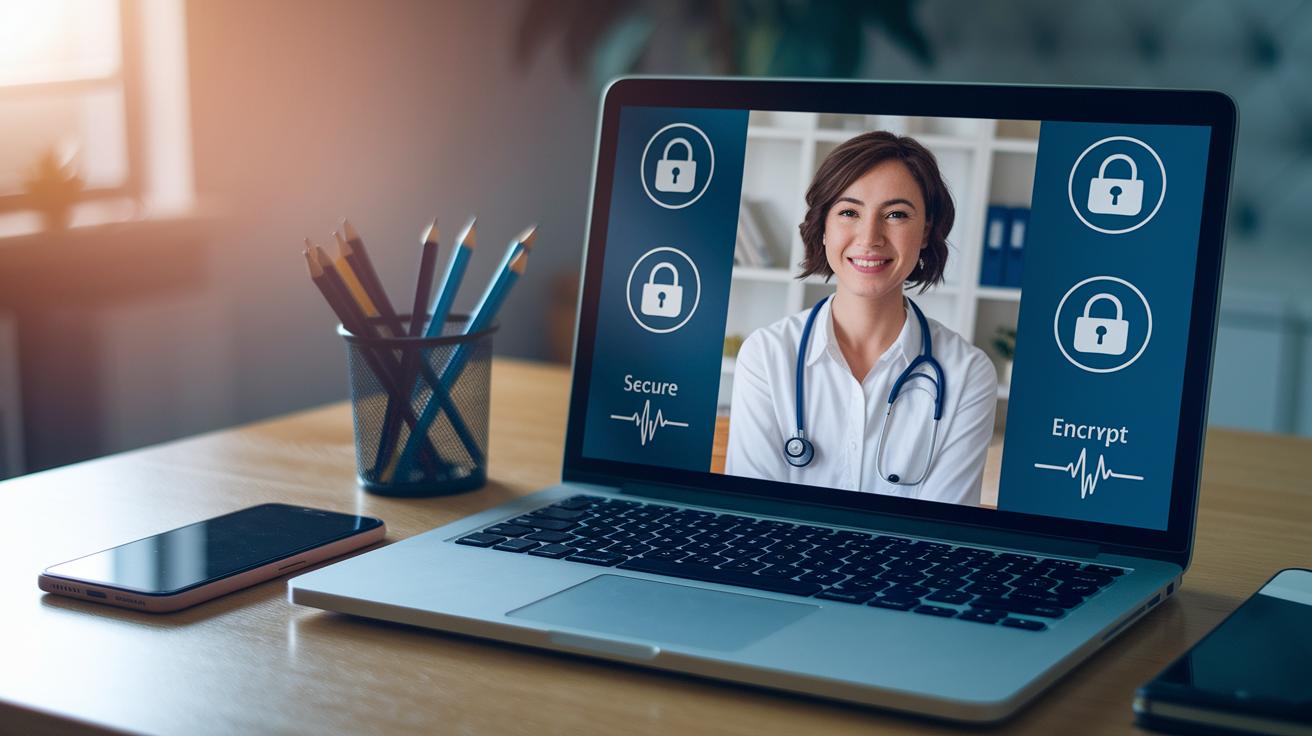
Encryption is crucial for keeping your health information safe during telehealth sessions. When your sensitive health data travels across networks or is stored on systems, strong encryption works like a digital lock, preventing unwanted access and giving both patients and providers peace of mind.
Here are some key protections we use:
- SSL/TLS transport encryption: This method wraps your data in a secure layer as it moves across the internet, keeping messages safe.
- AES-256 at-rest encryption: When data is stored, this powerful tool locks it away, ensuring it stays private.
- End-to-end encryption: By securing the message from its starting point to its final destination, only the intended recipient can read the information.
- PIN and biometric locks: These extra checks confirm that only the right person can access the messages, adding another layer of security.
- Secure key management and rotation: Regularly updating and carefully managing encryption keys keeps the entire system robust and trustworthy.
Using these protocols, telehealth systems not only meet HIPAA guidelines (those are the rules that protect health information) but also build trust by reducing the risk of data breaches. Every piece of your sensitive information is handled with care, making digital care feel just as safe as an in-person visit.
Compliance and Regulatory Requirements for Telehealth Messaging
When it comes to telehealth, following HIPAA (healthcare privacy rules) is a must. Every telehealth vendor needs to sign a Business Associate Agreement (BAA) to promise they handle patient data with the utmost care. This agreement shows that everyone involved is committed to keeping health records private and secure.
Technical safeguards are a big part of this promise. For example, providers use:
- Audit logs that record every event,
- Access controls that only let the right people see the data,
- Remote wipe features to clear data from lost or stolen devices, and
- Breach notifications that alert teams when something unusual happens.
Organizational safeguards are key too. Healthcare providers run regular risk checks and stick to clear written policies on data use. They also train all staff at the start and every year afterward to ensure everyone stays up-to-date on HIPAA rules. These careful steps create a safe and reliable environment for telehealth messaging.
It’s also important to note that standard SMS doesn’t offer the strong protections needed for handling Protected Health Information (PHI). Using non-compliant messaging can lead to fines and hurt a provider’s reputation.
Secure Messaging Integration with Telehealth and EHR Systems

When secure messaging works together with telehealth systems and electronic health records, everything just clicks into place. This smooth integration helps doctors and nurses share important details fast and clearly. For example, after booking an appointment through a secure portal, a doctor might quickly say, "I just saw your appointment confirmation." It's a sign that these systems are designed to work at lightning speed.
EHR Integration
By using tools like APIs and FHIR (which help different systems talk to each other), secure messaging ties right into your health records. With single sign-on, users can view and manage both their messages and their records without the hassle of logging in again and again. Companies like OhMD show how well it works by merging website chat with EHR systems, so healthcare teams can check patient details and messages all in one safe spot.
Scheduling and Patient Portals
When scheduling and patient portals join the party, things get even better. Imagine a system where booking, rescheduling, or even canceling an appointment is as simple as dragging and dropping items on a screen. Blaze.tech offers tools that do just that. These systems not only make appointments easier but also add a touch of live, secure messaging support right from the portal.
Bringing together messaging, EHRs, and scheduling means every bit of information stays on point. This clean flow of data cuts down on mistakes and helps the whole team feel confident and connected while taking care of patients.
Telehealth Secure Messaging Platforms and Vendor Comparison
When organizations choose a secure messaging platform, they look for solid safety features, clear pricing, and smooth technology integration. They want systems that protect patient data with strong tools like PIN locks and audit logs, along with easy ways to send texts, voice messages, and video calls. They also check if the system can work with healthcare records and other digital tools. Cost is very important too, as it must fit both large networks and smaller practices that need an affordable start. In short, comparing platforms carefully helps teams pick technology that matches their daily work and keeps data safe.
| Platform | Pricing | Key Security & Messaging Features |
|---|---|---|
| TigerConnect | Enterprise pricing | PIN/biometric locks, recall, audit logs |
| OhMD | Free/basic + $250/mo | EHR integration, two-way media chat |
| Spruce Health | $24/$49 per user | Multi-channel (chat, fax, video) |
| Paubox | $29 per sender | Email encryption, Office365/Gmail UX |
| Blaze.tech | Custom pricing | No-code app builder, API integrations |
It is important for each organization to choose a platform that fits its size and work style. Big healthcare groups might choose strong solutions like TigerConnect because of its secure locking functions and detailed audit trails, even if a few role-based options could be fine-tuned. On the other hand, smaller practices or new telehealth businesses might find OhMD very appealing. OhMD offers a free basic version with the option to upgrade if more features are needed. Other services such as Spruce Health give you a complete hub that works for various communication needs, while Paubox focuses on keeping email secure in a simple way. And if you need a platform that can be built to your unique needs without writing code, Blaze.tech might be just the right fit.
Best Practices for Implementing Secure Telehealth Messaging

Good governance is the heart of secure telehealth messaging. It keeps patient details safe and helps everyone communicate clearly. When clear policies are in place, everyone, from office managers to the front-line team, knows exactly how to protect health information.
- Do regular checks for risks and review how secure your vendors are.
- Train staff on both the system features and healthcare privacy rules (like HIPAA, which protects patient information) when they join and every year after.
- Create simple rules for how to use, store, and automatically delete patient data.
- Set up agreements with every outside vendor to ensure they promise to protect data.
- Keep a close eye on messaging logs all the time to catch every activity.
- Do regular reviews to spot and fix any gaps.
Regular checks, ongoing training, and clear, updated policies all work together to create a secure messaging space. This steady review builds trust and makes sure all communications follow privacy rules, giving healthcare providers a strong, smart foundation for digital care.
Final Words
In the action, we explored vital secure messaging features for telehealth that streamline patient care. We looked at real-time and asynchronous chat options, with clear notifications and robust end-to-end encryption. The post also reviewed key compliance measures, encryption protocols, and effective system integrations that enhance workflow efficiency.
We took a close look at vendor comparisons and implementation best practices, all aimed at improving daily operations and patient outcomes. Secure messaging features for telehealth keep healthcare communication safe and effective, inspiring confident and positive care.
FAQ
What are the privacy and security concerns in telehealth?
The question about privacy and security in telehealth highlights the need for strong encryption, controlled access, audit trails, and careful vendor assessments to protect sensitive health data during online consultations.
What is remote monitoring in telehealth?
The question on remote monitoring in telehealth refers to the use of wearable sensors, apps, and secure messaging that enable providers to track patients’ health data from afar, supporting continuous and timely care.
How is patient information security enhanced in telehealth?
The question regarding the enhancement of patient information security means telehealth systems use strong encryption, verified user access, audit trails, and secure messaging protocols to protect data and maintain confidentiality.
What is secure messaging in healthcare, including SimplePractice Secure Messaging?
The question on secure messaging in healthcare means using encrypted communication channels with features like message recall, auto-deletion, and confirmation indicators. SimplePractice Secure Messaging is one example of this safe, efficient approach.
Is telehealth safe?
The question about telehealth safety indicates that telehealth is safe when providers use HIPAA-compliant platforms with robust encryption, secure data storage, and strict access controls to maintain patient privacy and trust.
What should patients have available during a telehealth appointment?
The question about necessary items for a telehealth appointment means patients should have a reliable internet connection, a video-enabled device like a smartphone or computer, and any relevant health records or documents on hand.
How do HIPAA rules impact telehealth?
The question on HIPAA and telehealth shows that HIPAA rules require secure messaging, strict data access controls, vendor agreements, and continuous monitoring practices to protect patient data during digital health interactions.
Which messaging platforms are HIPAA compliant?
The question regarding HIPAA-compliant messaging platforms includes systems like TigerConnect, OhMD, and Paubox, which use encrypted communication, audit logs, and secure key management to meet HIPAA standards.
What is the most secure messaging protocol in telehealth?
The question on secure messaging protocols in telehealth means protocols often use end-to-end encryption with SSL/TLS for data in transit and AES-256 for data at rest, providing a strong safeguard for sensitive patient data.

