
Ever wondered if data could help spot potential health issues early on? Data analytics connects patient records, insurance info, and live health details to give doctors a clearer picture.
Imagine a clinic noticing a pattern that hints at a problem before it gets serious. This means care can start sooner, much like catching a small leak before it turns into a flood.
Using these methods, doctors can see patient outcomes more clearly and make decisions faster. In this blog, we'll explore how smart use of data leads to better care and helps keep you healthier.
Strategic Data Analytics Approaches to Improve Patient Outcomes
When we look at financial, administrative, and clinical data, we can spot high-risk patients early on. Predictive models scan for signs of issues like diabetes or heart disease, so care can begin right away. For example, a clinic might match patient records with insurance claims to flag someone at risk for heart problems.
Modern data platforms combine details from hospitals, pharmacies, clinics, insurers, telehealth visits, and wellness apps into one clear view. This unified snapshot makes it easy to see how a patient’s care travels from one provider to the next. Imagine a hospital that uses these tools to notice more patients need extra support during flu season; stepping in early can help ease patient discomfort before things worsen.
Data-driven care isn't just about better clinical outcomes, it also makes resource planning smoother. Hospitals can, for example, adjust staffing levels or streamline operating schedules by studying trends. Predictive healthcare modeling acts like a roadmap, offering clear, timely insights that lead to better care and smarter use of funds. When all these data elements work together, they pave the way for personalized treatment and improved well-being.
Healthcare Data Sources Vital to Patient Outcome Analytics

Electronic health records give us a clear view of a patient’s detailed clinical history. Insurance claims, on the other hand, let us see the financial and administrative aspects of care. Patient surveys add a personal touch, capturing how individuals feel about the care they receive. Data from devices like wearables and implantable monitors offer real-time updates on our health. Meanwhile, community health databases help us understand local trends and how resources are used. For example, a clinic might combine data from electronic records with patient survey feedback to see where they can improve care. One patient even mentioned feeling a boost in confidence when their care team went over recent lab results during a follow-up visit.
All these sources come together to create a complete picture of each patient. By mixing clinical, administrative, and financial information, healthcare providers get a strong base for analysis. This combined data helps guide research, decide on staffing, review clinical practices, and even streamline supply-chain management.
- Electronic health records
- Insurance claims
- Patient surveys
- Device-generated data
- Community health databases
Together, these insights enable healthcare teams to tailor care and make data-driven choices that improve patient outcomes.
Analytics Tools and Technologies Shaping Patient Outcomes
Modern data platforms are at the heart of keeping patient information safe. They pull data from many sources like electronic records, claims, devices, and surveys, and they grow as our needs increase. Imagine a system that sorts and stores patient details as neatly as a well-organized file cabinet, everything remains secure and easy to find.
Predictive models and machine learning are key players in patient care. They help sort patients by risk, notice differences in care, and even predict what might happen next. For instance, picture a system that alerts clinicians when a patient shows early signs of heart trouble, giving doctors a chance to act before a crisis arises.
Real-time dashboards and monitoring tools add even more support by showing health trends in clear, simple visuals. These tools let doctors notice new patterns quickly and step in when needed. It’s a bit like having a steady pulse on the hospital’s heartbeat, which helps ensure everyone gets timely care.
Advanced analytics platforms do more than just secure patient data, they also encourage teamwork among care providers. They turn complicated numbers into easy-to-understand insights that lead to smarter clinical decisions every day.
Metrics and Methods for Evaluating Patient Outcomes via Data Analytics
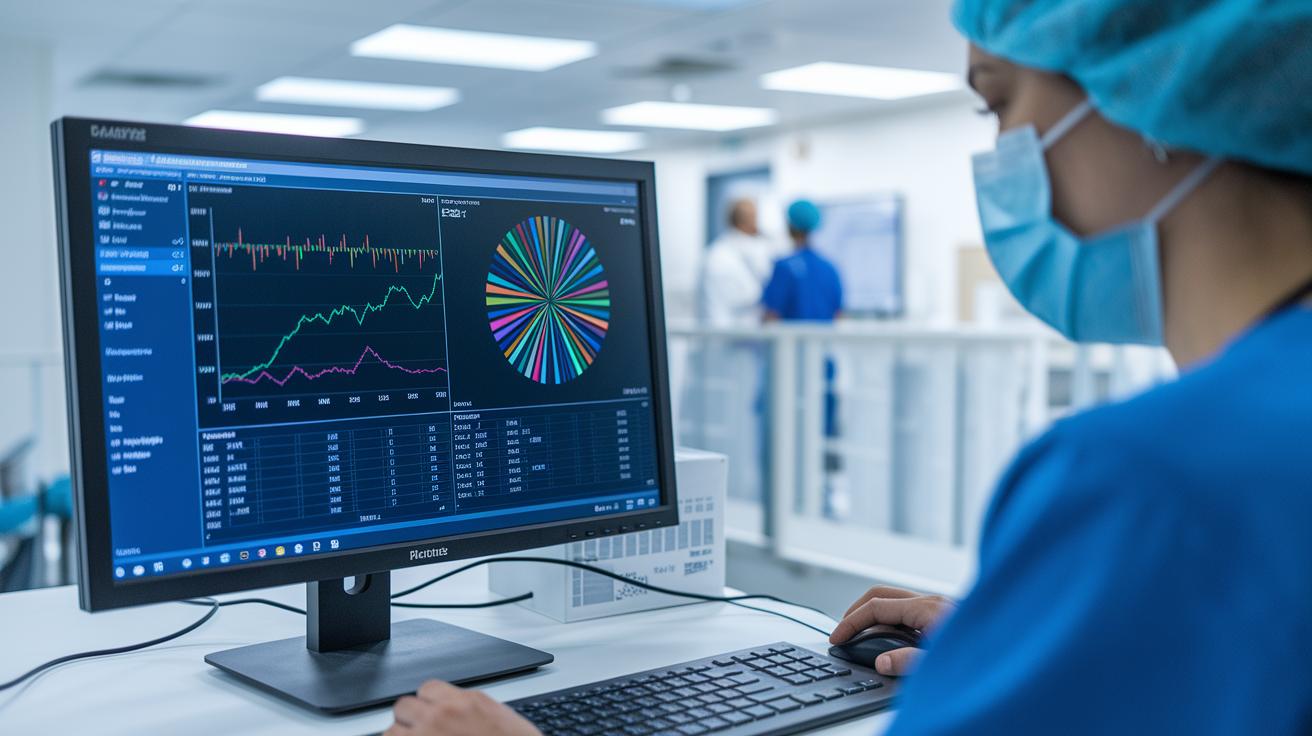
Measuring what really matters helps us boost patient care. We keep track of important things like how often patients return for care, how long they stay, how many do not make it, how happy they are with their care, and whether treatments work well. Think of it like a sports team reviewing its losses to learn and improve, simple but effective.
We use smart methods to do this. For example, risk stratification groups patients by risk, so care teams can give extra attention where it’s needed most. Statistical modeling works like a clear map that shows trends and helps us predict how care can improve over time. Trend analysis acts like a magnifying glass, revealing subtle changes in patient health that could mean a lot in the long run.
Real-time dashboards and monitoring tools are true game changers. They give clinicians clear visuals to spot shifts in care quality immediately. With these tools, teams can quickly adjust treatment plans or staffing and run quality studies efficiently.
| Core Metrics |
|---|
| Readmission rates |
| Length of stay |
| Mortality rates |
| Patient satisfaction scores |
| Treatment efficacy indicators |
| Analytical Methods |
|---|
| Risk stratification |
| Statistical modeling |
| Trend analysis |
With these clear measures and tried-and-true methods, every health decision becomes a step toward care that is faster, safer, and better for everyone. Isn’t it reassuring to know that every detail counts?
Addressing Data Privacy and Compliance in Patient Outcome Analytics
Patient outcome analytics really depends on keeping sensitive information safe. When we follow HIPAA (healthcare privacy rules that protect your privacy) and strong data governance guidelines, we make sure patient details stay private at every step.
We use tools like encryption, role-based access controls, and audit trails. Think of them like secure locks that only let the right people in. This way, only authorized users can see important information, which cuts down on the chances of data misuse or accidental exposure.
The system also tracks security in real-time and reviews procedures often. This careful monitoring helps spot any issues early, much like checking locks on your door before bed. Every time someone accesses the data, we log it and review the records to make sure we’re meeting all the rules.
In fact, regular audits and solid monitoring practices not only help us follow regulations but also build trust in our digital systems. This constant vigilance lets healthcare teams analyze data responsibly while keeping patient privacy front and center.
Integrating Analytics Insights into Clinical Workflows for Better Patient Outcomes

When dashboards and decision-support tools are built into electronic health record systems, clinicians can act on important data in real time. These tools bring clear, actionable insights straight into daily routines. For example, weekly staffing reports based on current data help reduce patient wait times and fine-tune operating room schedules, allowing teams to quickly move resources where they’re needed most.
When decision support is a part of EHR systems, like the ones you can see in the clinical decision support link, healthcare professionals always have key information at hand. They can monitor important numbers such as appointment delays and treatment turnaround times as they go about their work. This constant glance at essential data encourages small, steady improvements that keep patient care running smoothly.
By turning raw data into practical tools, care teams can compare today’s performance with set benchmarks and adjust their practices immediately. Regular feedback from live dashboards helps create a cycle of ongoing improvement, where every insight plays a part in delivering more responsive care. In this way, clinicians are empowered by simple, measurable data that directly leads to better patient outcomes.
Final Words
In the action, we explored how modern data platforms and predictive models turn numbers into care improvements. We broke down electronic medical records, surveys, and device-smart insights that shape patient care. We also tackled how encryption, audit trails, and compliance practices keep data safe.
Data analytics for patient outcomes takes center stage by empowering providers to make real-time, informed decisions that brighten healthcare delivery. The future of care is secure, smart, and moving forward toward better patient experiences.
FAQ
What do data analytics for patient outcomes examples show?
The data analytics for patient outcomes examples illustrate how consolidating financial, clinical, and administrative data helps identify high-risk patients and predict outcomes for timely, personalized care.
What are data analytics in healthcare examples?
The data analytics in healthcare examples include using electronic health records, insurance claims, and device data to create unified patient profiles that guide treatment decisions and improve care delivery.
What is the role of data analytics in healthcare?
The role of data analytics in healthcare is to use detailed data reviews to predict risks, optimize processes, measure outcomes, and support data-driven decisions that enhance patient care.
What is the Healthcare Data Analyst salary like?
The Healthcare Data Analyst salary reflects skills in reviewing clinical and administrative data, varying by location, experience, and the scope of the healthcare system being analyzed.
What are the benefits of data analytics in healthcare?
The benefits of data analytics in healthcare include improving patient care, using resources efficiently, detecting risks early, and enhancing treatment strategies through informed insights.
What do data analytics in healthcare scholarly articles cover?
Data analytics in healthcare scholarly articles discuss research methods, case studies, and evidence on how data-driven techniques improve patient outcomes and streamline operations.
What is covered in a healthcare data analytics course?
A healthcare data analytics course covers both foundational and advanced techniques—including predictive modeling and real-time monitoring—to empower professionals in improving care quality.
What does healthcare data analytics certification validate?
Healthcare data analytics certification validates a professional’s skills in using key analytic tools and data methods to produce actionable insights that drive better clinical decisions.
How can data analytics be used to improve healthcare outcomes?
Data analytics can be used to improve healthcare outcomes by merging data from various sources, forecasting patient risks, and integrating insights into clinical workflows for proactive care.
What is healthcare analytics for patient outcomes?
Healthcare analytics for patient outcomes involves using statistical models and real-time data to measure and enhance clinical processes, ensuring treatment methods lead to better patient results.
What are the four types of data analytics in healthcare?
The four types of data analytics in healthcare are descriptive, diagnostic, predictive, and prescriptive analytics, each offering unique insights from historical, current, and future data trends.
What are the four main possible data analysis outcomes?
The four main possible data analysis outcomes include an understanding of past performance, diagnoses of issues, predictions of future events, and recommendations for effective improvements.

