
Have you ever thought about how cool it would be if technology could spot your health needs before they even show up? New trends in medical technology are changing how your doctor cares for you. Smart computer tools can see patterns in sickness, while clever devices keep an eye on your health all day. Each breakthrough helps doctors give you faster and more accurate treatment, all while keeping your personal details safe. In this article, we explore these exciting changes and show how they make healthcare feel more connected and secure.
Medical Informatics Future Outlook: Key Trends and Predictions
In a recent report from March 15, 2024, data analytics has emerged as a real game-changer in healthcare. New analytical tools are now turning complex data into quick, clear actions that help doctors and nurses deliver care faster. For example, one study found that today's predictive models can even forecast patient admissions with an accuracy that surprises experts.
When we mix electronic health records, telemedicine, and smooth health information sharing with breakthroughs in genetics and strong digital security, clinical care is evolving rapidly. These tools not only let healthcare providers communicate better and offer more personalized care, but they also work together to protect important health details like a trusted, secure network.
- AI and machine learning help improve how diseases are diagnosed and how doctors organize daily tasks
- Advanced predictive analytics can forecast outbreaks and plan for needed resources ahead of time
- Wearable medical devices keep an eye on patients around the clock for better monitoring
- Blockchain and upgraded privacy protocols keep patient data secure
- Genetics-driven precision medicine tailors treatments to each person
These trends are set to change research, guide policy decisions, and reshape everyday practices in clinics. Researchers and lawmakers can use these innovations to build smarter data systems, while doctors benefit from smoother workflows that lead to better patient care. In truth, every new step adds to a more connected and secure healthcare system that meets today’s challenges and sets higher standards for the future.
Big Data and Predictive Analytics in Medical Informatics

Big data in medical informatics is like having a super-smart friend who helps you understand heaps of health information. By using tools like predictive modeling, machine learning, and natural language processing, healthcare professionals can turn mountains of data into clear, useful insights. This means that when doctors get alerts from digital records, those alerts are smarter and more helpful. Imagine learning algorithms that carefully review large groups of patient information so that healthcare providers can cut down on unnecessary alerts and focus on giving care when it's really needed.
| Technique | Use Case | Benefit |
|---|---|---|
| Predictive Modeling | Forecasting patient admissions | Better planning for resources |
| Machine Learning | Finding hidden patterns in data | More accurate diagnoses |
| Natural Language Processing | Reviewing unstructured clinical notes | Improving treatment insights |
| EHR Alerts Optimization | Streamlining key notifications | Less alert fatigue for providers |
When using these smart techniques, healthcare teams also need to think about ethics and data rules. Strict policies help protect patient privacy while making sure that the right people can access the information safely. Plus, picking the best data storage setup can really change how quickly and effectively insights are gained. In truth, balancing tech advances with careful data management is essential for building trust and ensuring safe, patient-centered care.
AI-Powered Patient Care in Medical Informatics
AI and machine learning are changing patient care by offering quicker and more personalized treatment options. These smart tools sift through lots of data to help health experts spot problems early so they can step in before issues grow worse. For example, some algorithms look at patient records to hint at possible conditions before symptoms start, guiding doctors toward better treatment.
New diagnostic tools now mix deep learning with everyday clinical tasks. Imagine systems that review imaging studies and lab results alongside medical staff. This teamwork helps cut down waiting times and lets healthcare professionals spend more time with patients while AI takes care of routine checks and initial data reviews.
Language processing and decision support systems also boost patient care by turning jumbled clinical notes into clear, useful insights. They send real-time alerts about screenings, drug interactions, or needed follow-ups, standing by to help healthcare teams during important moments. These smart apps learn and adjust continuously, making care paths smoother and more responsive to what patients need.
Even with all these exciting advances, human care is still essential. Doctors and nurses check the suggestions from AI to catch any mistakes or biases before making care decisions. Regular reviews and strong checks ensure that innovative technology works well with trusted medical practices, so every patient gets safe, effective, and personal care.
Evolution of Electronic Records and Interoperability in Medical Informatics

Since the mid-1990s, medical offices began switching from paper files to digital records. This change made things run smoother, patient check-ins got faster and even emergency room care improved. It was like suddenly flipping on a bright light, making important health information easier to find and use.
Today, hospitals and clinics use shared systems that help everyone work together. These common standards mean doctors, nurses, and other health professionals can share patient data on one easy-to-use platform. That teamwork cuts down on mix-ups and helps keep care organized and safe for everyone.
Efforts to connect different digital systems are still ongoing. When systems “talk” to each other smoothly, health teams can make smarter, quicker decisions about treatment. Sure, there are still a few bumps along the way, but every day brings improvements that make managing and sharing patient information more secure and reliable.
Telemedicine and Remote Monitoring Innovations in Medical Informatics
Telemedicine has grown really fast and is changing how health care is delivered. Now, patients can get consultations and follow-ups from almost anywhere, making care easier to access.
Remote monitoring tools are getting smarter, too. They use wearable devices and connected networks that help track vital signs in real time. Imagine a smartwatch that gently reminds you about your health, that’s the idea here. These devices send clear data right away, which is very useful for folks dealing with chronic issues or recovering from surgery.
Mobile health apps are a big hit as well. They keep patients connected through secure, user-friendly platforms. This means people can be more involved in their own care, leading to better health decisions both today and in the future.
As remote consultations become more common, hospitals see fewer readmissions and save money too. By blending telemedicine with remote monitoring, care becomes more accessible and efficient, easing the strain on healthcare facilities while keeping patients happy.
Securing Clinical Data: Blockchain and Privacy Protocols in Medical Informatics
Healthcare groups today face real threats from cyberattacks. These hacks aim to steal private patient details. Rules like HIPAA (healthcare privacy rules) in the U.S. and GDPR (European privacy rules) push every clinic to protect personal data. With threats changing fast, it’s important for everyone to keep up with new security steps and regularly check their systems.
Blockchain is a bright solution here. It creates records that cannot be altered. Imagine a record history that feels as solid as a locked diary. When coupled with secure, encrypted messages that alert you in real time, these tools cut down risks and build clear trails that track every access. Many view the use of blockchain in clinics as a promising path forward in organizing clear records while also boosting secure internal communication.
Healthcare leaders are blending new tech with strong policies to safeguard patient data. They are setting up firm rules for secure messaging and doing regular risk checks. By mixing modern encryption methods with blockchain’s reliable record-keeping, clinics create strong systems that not only match today’s security needs, but also are ready for future challenges in protecting patient information.
Integrating Genomics and Bioinformatics Solutions in Medical Informatics
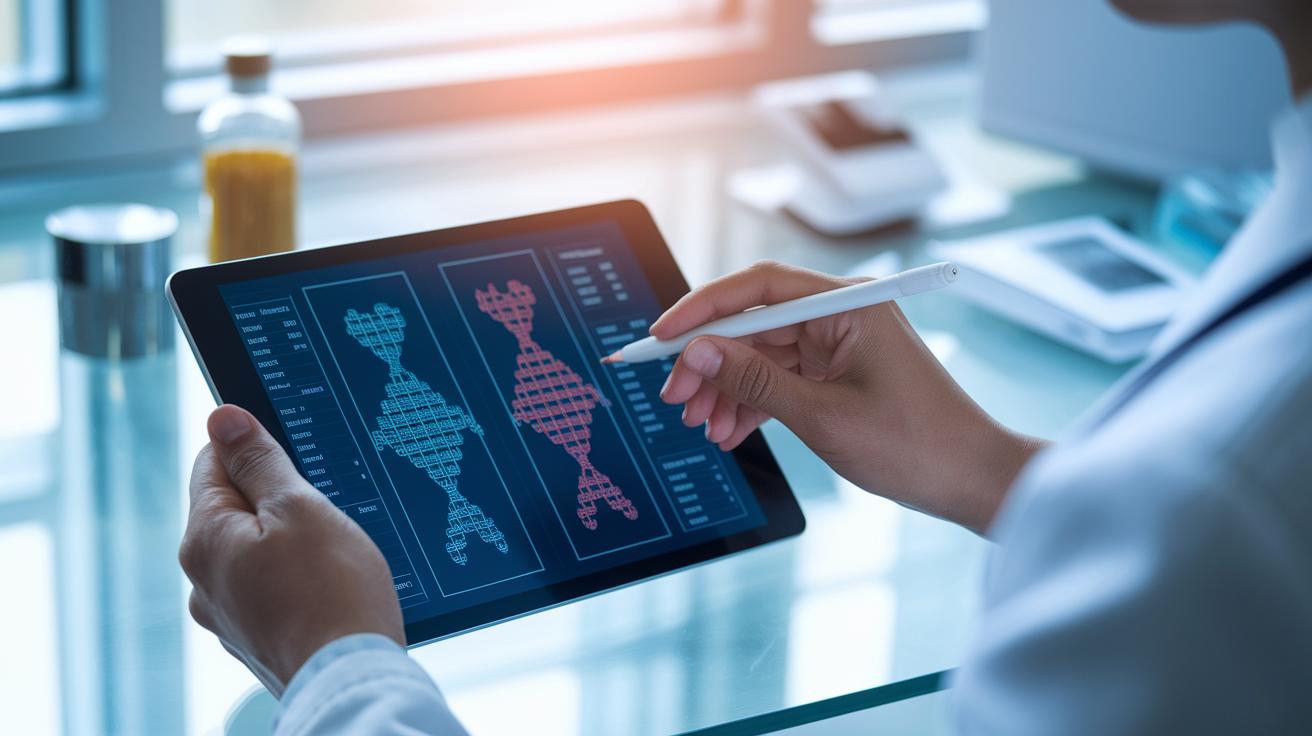
Genomic sequencing now plays a big role in everyday patient care. It’s like having a detailed map of a patient’s unique genetic makeup that guides doctors in making the best care choices. Imagine a doctor looking at a digital gene chart as if reading clear directions to design a treatment that suits your biology perfectly.
Bioinformatics platforms help handle huge amounts of genetic data. They work behind the scenes, from simple checkups to large clinical trials, to spot tiny signs that may hint at early changes in health. For example, a specialist might catch a subtle genetic marker that tells how well a patient might respond to a treatment. This discovery can lead to treatments designed just for that patient and boost preventive care and research.
Precision treatment now gets even better with the power of genomics and bioinformatics. Studies in cancer care show that when decisions are backed by data, it saves money and improves results. As processing of genome data grows, treatments become more tailored and prevention strategies better. This seamless mix of technology and care aims to create a future where personalized, forward-thinking care is a regular part of our lives.
Smart Hospital Innovations and Automation in Medical Informatics

Smart hospitals are changing the way we care for patients by using advanced digital tools every step of the way. These hospitals connect devices and systems to watch patient health in real time and adjust resources as needed. Imagine a place where every sensor sends quick updates, making care more proactive and organized.
Augmented reality (AR) and virtual reality (VR) are making hospital training and imaging more engaging. Trainees can now step into a virtual operating room, which helps turn complex ideas into clear pictures. For example, a resident might use VR to explore a 3D heart model, making learning feel more real and accessible.
Robotic surgery and automated systems are also redefining hospital work. Robots, guided by detailed data, help make surgeries more accurate and can even shorten recovery times. At the same time, automation takes care of routine tasks, letting doctors and nurses spend more time with patients and reducing mistakes.
All of these innovations work together to boost patient safety, streamline hospital processes, and lower costs. When hospitals use digital tools for real-time monitoring and let robots lend a hand, care becomes smoother and more efficient, sort of like watching a well-tuned machine in action, where every part plays a role in making things better and safer.
Final Words
In the action of enhancing patient care, the article showcased how data analytics, AI, and secure communications are transforming clinical workflows and decision-making. It outlined advances from personalized medicine to integrated EHR systems, while giving a nod to emerging security measures.
By embracing future trends in medical informatics, healthcare teams can streamline operations, boost diagnostic precision, and protect sensitive data. The potential for improved outcomes is clear, and every step forward brings us closer to a more connected and secure healthcare future.
FAQ
Q: What are the future trends in medical informatics for 2021, 2022, and 2025, and what is its overall future?
A: The future trends in medical informatics show a move toward AI, machine learning, cloud-based computing, and secure data exchange, all aimed at creating smarter, patient-centered healthcare systems.
Q: What are some examples of health informatics?
A: The health informatics examples include electronic health records, wearable devices, telemedicine platforms, and health information exchanges, which all improve data sharing, diagnosis speed, and patient care communication.
Q: What are the benefits of health informatics?
A: The benefits of health informatics include enhanced communication, faster diagnostics, fewer errors, cost savings, and better patient safety, making healthcare delivery more efficient and effective.
Q: What jobs are available in health informatics?
A: The health informatics jobs cover roles like data analyst, clinical informaticist, and systems manager, each helping to manage digital records, optimize workflows, and support secure patient care.
Q: What is the future of healthcare by 2025 and the upcoming trends in health information technology?
A: The future of healthcare by 2025 features advanced analytics, AI-driven diagnostics, telehealth innovations, secure data practices, and genomics-based care, which will reshape professional roles and improve patient outcomes.

