
Have you ever wondered how thyroid tumor treatments truly help patients? There are many ways to treat thyroid tumors. Some treatments include surgery, new radiation techniques, and targeted therapies. Each method helps improve survival and quality of life.
Doctors use a simple test called fine-needle aspiration (a tiny sample is taken to examine the tumor) to decide the best treatment for you. This article explains what you can expect and how these choices lead to reliable, hopeful outcomes in the fight against thyroid tumors.
Comprehensive Overview of Thyroid Tumor Treatment Options
Thyroid tumor care comes in four main forms: surgery, radioactive iodine, external beam radiation, and systemic therapies. Surgery is often the first step, especially with papillary carcinoma. For example, many patients with papillary carcinoma who have surgery along with radioactive iodine enjoy a 10-year survival rate above 90%. In contrast, anaplastic carcinoma is very challenging with a median survival of less than six months even when using several treatment methods together.
Fine-needle aspiration cytology, a test that uses a thin needle to take a small sample, plays a key role in planning treatment. It is about 95% accurate in spotting cancer risk, acting like a trusted red light that guides doctors to the right treatment choice.
Molecular profiling, which looks for genetic changes in tumors like BRAF and RAS, is showing great promise. It helps about 40% of advanced cases benefit from targeted treatments. Imagine it like getting a custom-made plan where one simple test leads to treatments tailored to your tumor’s unique traits.
Radioactive iodine is given in personalized doses based on a patient’s risk and works well after surgery to lower the chance of cancer returning. External beam radiation is usually used when surgery isn’t an option or if the tumor is very aggressive. Together, these options bring together trusted techniques and innovative strategies, ensuring every patient gets the best care on their journey to recovery.
Surgical Management in Thyroid Tumor Treatment Options
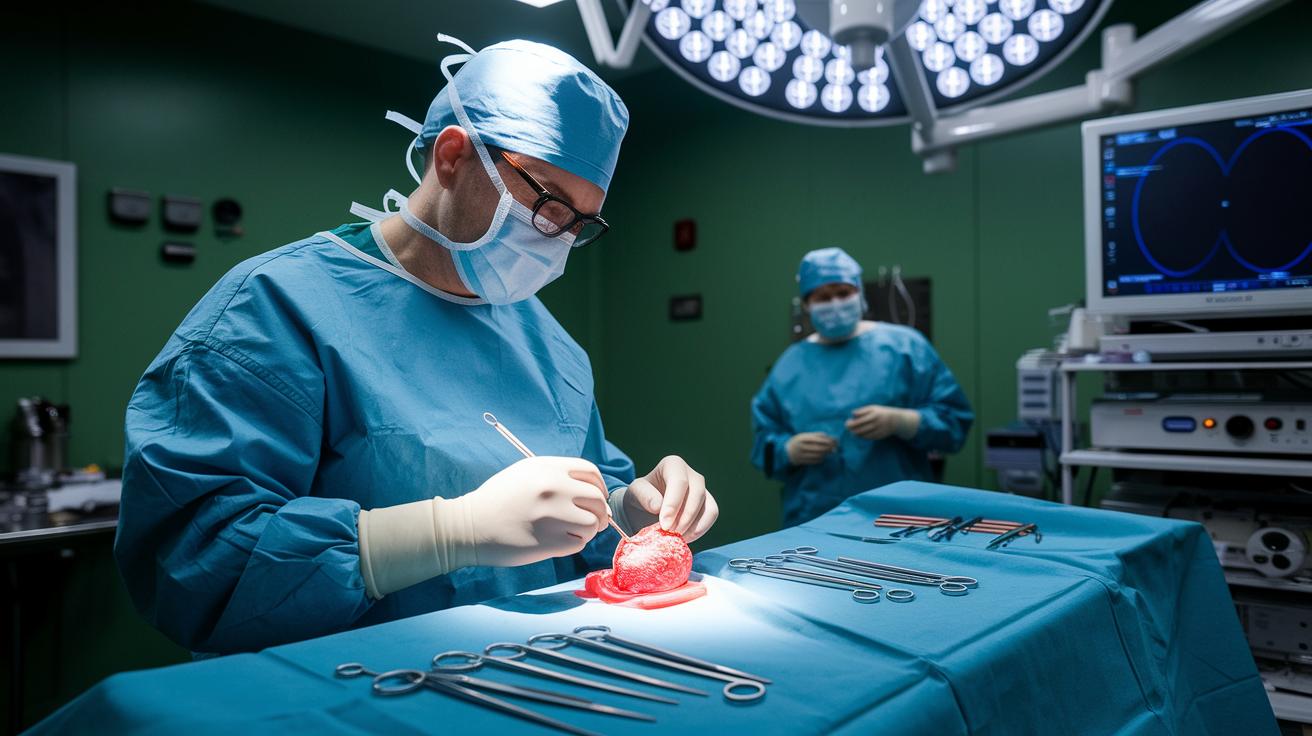
When a thyroid tumor is larger than 1 cm or shows up in many spots on both sides of the thyroid, doctors usually suggest taking out the entire gland. But if the tumor is a small, single papillary carcinoma measuring 1 cm or less, then removing just one side of the thyroid may be the better option. And get this, video-assisted thyroidectomy might cut the incision length by almost half and could even shorten your hospital stay by about one day. Imagine the relief of a smaller cut and faster recovery!
For more widespread thyroid issues, traditional open surgery is still common. However, newer methods, such as video-assisted and robot-assisted thyroidectomy, are catching on. These modern techniques also include transoral and axillary robotic approaches that not only deliver smoother cosmetic results but also keep the risk of injury to the recurrent laryngeal nerve very low, around 2%. It’s a nice blend of technology and care that keeps your appearance and vital functions in mind.
To further safeguard important nerves, surgeons now often use intraoperative nerve monitoring during the procedure. This careful step has been shown to reduce permanent damage to the recurrent laryngeal nerve to less than 1%. Keeping these nerves intact is crucial because any harm could affect your voice or breathing. It’s comforting to know that both patients and doctors benefit from these extra safety measures.
After surgery, close attention is paid to your recovery. About 10-20% of patients might get low calcium levels, which are usually managed easily with oral calcium and vitamin D supplements. In short, by carefully planning the surgery, using advanced methods, and keeping a watchful eye during recovery, doctors are paving the way for safer and more promising outcomes in treating thyroid tumors.
thyroid tumor treatment options: Reliable, Promising Results
If you aren't a fan of surgery or can't have it for health reasons, there are safe, less invasive ways to treat thyroid tumors. One option is radiofrequency ablation, a treatment that uses heat to shrink the nodule. Research shows that this method can reduce a non-cancerous nodule's size by 60 to 80% in just six months. Imagine a procedure that makes a real difference with only a tiny cut.
Another method is percutaneous ethanol injection. Here, a small amount of alcohol is injected directly into the tumor, clearing up cysts completely in about 85% of cases. It works like a careful, targeted treatment that clears away the troublesome cyst.
For nodules that are both solid and cystic, laser ablation is a strong choice. This approach typically cuts the nodule's size by about half over a year. It combines precise treatment with modern imaging, so doctors can guide the process safely without harming nearby tissues.
These gentle, noninvasive treatments offer a welcome alternative for those who prefer to steer clear of traditional surgery. They come with lower risks, quicker recovery times, and the comforting blend of modern imaging with focused care, paving a reliable way to manage thyroid tumors effectively and safely.
Radioactive Iodine and External Radiation in Thyroid Tumor Treatment Options

Radioactive iodine (RAI) therapy is a personalized treatment for thyroid cancers that work best when the cancer cells look like normal thyroid cells. Doctors choose doses between 30 and 100 mCi based on each patient’s risk. Low-risk patients usually see great results, with about 90% achieving removal of leftover thyroid tissue. One example showed that a 50 mCi dose brought excellent results with very little discomfort. Of course, like any treatment, there can be side effects. Some patients may have swelling in their salivary glands (sialadenitis) in about 5 to 10 out of 100 cases, and dry mouth (xerostomia) in roughly 20 out of 100. Still, the chance of developing another cancer is very low, less than 1%.
External beam radiation therapy (EBRT) is used when tumors cannot be surgically removed or when they are very aggressive. Patients usually receive a total dose between 40 and 60 Gy over 4 to 6 weeks. This form of radiation can improve control of the tumor by about 30%. In very aggressive cases, such as anaplastic carcinoma, combining EBRT with chemotherapy can help extend life by roughly 4 to 6 months. Many patients appreciate that this combined approach offers a vital extension of quality life.
- Who benefits most: RAI works well for differentiated cancers, while EBRT is preferred when tumors are too tough to remove or are very aggressive.
- How they help: RAI helps prevent cancer from coming back, and EBRT improves control over aggressive tumors.
Targeted and Systemic Treatment Options in Thyroid Tumor Treatment Options
Multikinase inhibitors like lenvatinib and sorafenib have shown real promise. In patients with thyroid cancer that no longer responds to radioactive iodine, these drugs can offer roughly 18 months without progression. Imagine treatment that gives patients more quality time even when facing a tough cancer.
Cytotoxic chemotherapy, such as doxorubicin, works in about 15% of cases. It can sometimes affect the heart, so doctors have to balance the benefits against the risks. It really comes down to fighting the cancer while keeping the heart safe.
Checkpoint inhibitors, including anti-PD-1 drugs, are another hopeful option. They tend to work in about 10% to 15% of cases in both anaplastic and medullary thyroid cancers. This treatment can be a welcome alternative when other methods aren’t enough.
For tumors with the BRAFV600E mutation, BRAF inhibitors are a useful approach. They often bring partial responses and are now being tested in combination therapies in phase II trials. Think of it as finding the perfect key for a specific genetic lock in the cancer.
Recent trials of CAR-T cell therapy have even shown that around 30% of anaplastic thyroid cancer cases experience disease stabilization. It’s a new twist in treating an aggressive form of the disease.
| Treatment Option | Main Benefit |
|---|---|
| Multikinase inhibitors | Approximately 18 months of progression-free survival |
| Cytotoxic chemotherapy | About a 15% response rate with a need for heart monitoring |
| Checkpoint inhibitors | 10-15% overall response in select thyroid cancer subtypes |
| BRAF inhibitors | Partial responses in tumors with BRAFV600E mutation |
| CAR-T cell therapy | About 30% stabilization in anaplastic cases |
These new treatment paths are now being used together with traditional methods to create personalized care for each patient.
Postoperative Care, Hormone Management, and Follow-Up in Thyroid Tumor Treatment Options

After thyroid surgery, it's very important to keep your hormone levels balanced and watch your recovery closely. Your doctor will likely prescribe levothyroxine, a medication that helps maintain this balance. For patients at higher risk, the goal is to keep the TSH level below 0.1 mIU/L, while for those at lower risk, it's kept between 0.5 and 2.0 mIU/L. This careful dosing helps lower the chance of cancer returning and supports your overall well-being.
Every six to twelve months, you'll have simple blood tests to check your TSH and thyroglobulin levels. Thyroglobulin is a marker that is nearly 97% accurate in spotting any leftover tumor cells early. In addition to these tests, your doctor will schedule an annual neck ultrasound for five years to catch any early signs of a return, keeping a close watch on your progress.
Sometimes, after surgery, patients may experience early hypocalcemia, which means low levels of calcium in the blood. To handle this, doctors typically prescribe 1,000 mg of oral calcium along with 800 IU of vitamin D each day. They also check your serum calcium levels every week during the first four weeks to ensure everything is stabilizing properly.
All these steps join together to create a careful and supportive plan after surgery. Each test, medication, and checkup acts like a safety net that provides a reassuring touch during your recovery, helping you get back to everyday life with confidence.
Innovations and Future Prospects in Thyroid Tumor Treatment Options
Imagine a surgery where smart tools work like a hidden light show. Intraoperative fluorescence imaging now helps surgeons see tumor edges more clearly. This means they can remove tumors completely about 20% more often. When the tumor glows like a secret map, surgeons feel sure they are taking it out completely.
Next, new sequencing tests check for changes in genes like TERT, BRAF, and RAS. These tests help doctors choose treatments made just for about 40% of high-risk patients. Think of it as a special key that matches a unique lock on the tumor. Early studies also show that CAR-T cell and vaccine-based immunotherapies can stop the disease from worsening in about 30% of patients, adding a hopeful twist for care.
Even more exciting, AI-powered tools now mix images and lab results to predict if the cancer will come back with almost 90% accuracy. This smart mix of tools and tests is setting the stage for truly personalized care. These advances point to a future where tailored treatments and improved surgery work together, offering dependable new options in thyroid tumor care.
Final Words
In the action, we reviewed key approaches from surgery and noninvasive therapies to radioactive iodine and advanced targeted treatments. Each method offers unique benefits and risks that help shape the best regimen for every patient. We also touched on follow-up care and promising innovations that influence thyroid tumor treatment options. The discussion ties together everyday decisions and technical advances, keeping patient safety and clarity at the forefront. Bright prospects lie ahead with careful, informed health practices guiding better outcomes.
FAQ
What is the most common treatment for thyroid cancer?
The most common thyroid cancer treatment is surgery, often with radioactive iodine. Surgery may remove part or all of the thyroid, depending on tumor size and spread.
How is thyroid cancer treated without surgery, and is it curable?
Some low-risk or benign thyroid cases may use radiofrequency ablation or ethanol injections. However, most thyroid cancers are best managed with surgery and additional therapies for optimal cure rates.
What are thyroid cancer symptoms in females?
Thyroid cancer symptoms in females can include a lump in the neck, subtle hoarseness, and mild swallowing difficulties. Early detection is key to managing the condition effectively.
What is Stage 1 thyroid cancer treatment?
Stage 1 thyroid cancer treatment typically involves a hemithyroidectomy for small, localized tumors, sometimes followed by radioactive iodine depending on risk factors and tumor characteristics.
Is thyroid cancer deadly and what is the survival rate?
Most thyroid cancers are not deadly, with common types like papillary thyroid carcinoma having 10-year survival rates over 90%. Aggressive forms require prompt treatment and closer monitoring.
What are the signs that thyroid cancer has spread?
Signs that thyroid cancer has spread include persistent neck swelling, ongoing hoarseness, and difficulty swallowing. Imaging studies or lab tests are used to confirm any metastasis.
What are the treatment guidelines for papillary thyroid carcinoma?
Papillary thyroid carcinoma guidelines recommend surgery—often total thyroidectomy or hemithyroidectomy—sometimes paired with radioactive iodine therapy to minimize the risk of recurrence.
What is the treatment for thyroid tumors?
Thyroid tumor treatment options cover surgery, radioactive iodine, external beam radiation, and systemic therapies. The method chosen depends on the tumor’s type, size, and overall patient health.
Is thyroid cancer a big deal?
Thyroid cancer is serious and requires proper diagnosis; however, many forms have excellent outcomes when treated early, with regular follow-up care playing a critical role in maintaining health.

