
Every minute counts when a stroke happens. Quick actions, like getting a CT scan within one hour, can be the difference between a good recovery and ongoing problems.
In this guide, we break down the basic steps doctors take during stroke treatment using everyday language. We show you how doctors work to keep patients safe by stabilizing them, checking vital signs, and choosing treatments such as clot-busting drugs (medications that help break up blood clots).
Our goal is to give you a clear picture of how timely stroke care relies on teamwork to save lives and improve recovery. Ever wondered how fast action can really help in these situations? Let's take a closer look at these expert tips together.
Core Guidelines for Treatment of Stroke: Comprehensive Evidence-Based Framework
When someone has a stroke, doctors first work to stabilize the patient and do a complete check-up. As soon as a patient arrives at the hospital, imaging tests and lab work should be done within 60 minutes. Picture a situation where the team quickly gets a CT scan going. In less than an hour, they have all the crucial details needed to start life-saving steps. This fast check-up underpins the stroke treatment plans used by local hospitals and trusted groups like the American Stroke Association.
If a patient’s Glasgow Coma Scale score is 8 or less, doctors need to secure the airway right away to stop further complications. They also keep a close eye on blood pressure; for patients who might receive clot-busting treatment, blood pressure should stay below 185/110 mm Hg. Think of it as tightening screws before an important repair.
Doctors carefully balance the risks and benefits between clot-busting medication and procedures to remove clots. The clot-busting drug called t-PA is usually the first choice, even if a procedure to remove the clot is later planned. An approved alternative is tenecteplase (TNK), which has solid research backing its use.
A team approach is key in stroke care. Starting rehabilitation within 24 hours not only cuts down on complications but also helps patients recover better. This complete plan covers everything from quick prehospital checks, fast in-hospital tests, medicines, surgeries, and early rehabilitation, all working together to give patients the very best care.
Acute Ischemic Stroke Management Protocols
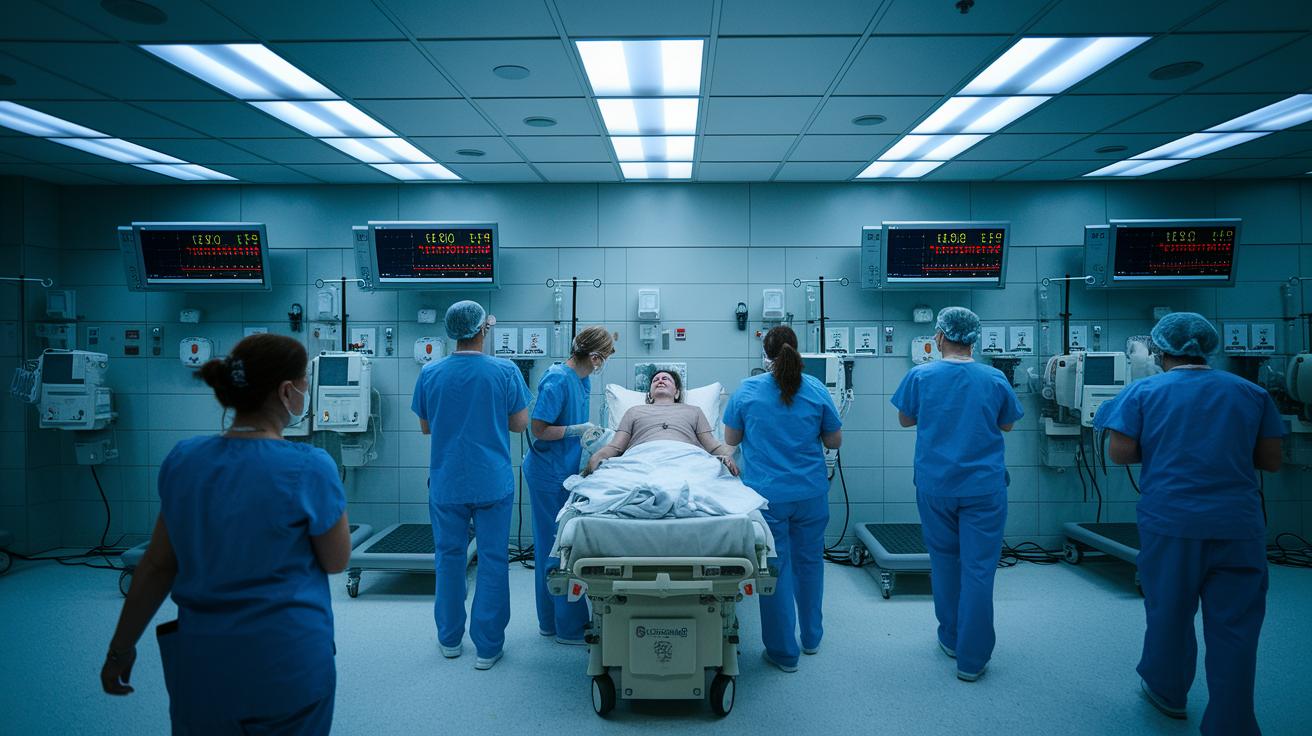
Quick action is essential. When someone shows signs of a stroke, the team immediately does a noncontrast CT scan within 20 minutes. This scan helps tell if the stroke is caused by a blocked blood vessel (ischemic) or bleeding in the brain (hemorrhagic).
The team must decide on starting the clot-busting drug t-PA within 60 minutes. Every minute matters, much like a soldier rushing to defuse a bomb in a few seconds.
Right away, the team gets IV access and sets up continuous heart monitoring because there is a high risk of irregular heartbeats. Hospitals work hard to keep the time from the door to the needle under 60 minutes so that blood flow is restored as fast as possible.
Medical teams follow a clear step-by-step plan that includes:
- Securing IV access and continuous heart monitoring
- Performing a noncontrast CT scan within 20 minutes
- Deciding on t-PA dosage within 60 minutes based on the patient’s weight
- Keeping blood sugar below 180 mg/dL to help stabilize the body
- Switching to tenecteplase for patients who qualify, following approved guidelines
- Limiting time in a flat position to less than 24 hours to prevent problems such as blood clots, skin sores, and breathing issues
Each step is meant to lessen brain damage and boost recovery. By using weight-based t-PA dosing and strict time limits, the team offers careful and precise care. This plan relies on clear scan guidelines, accurate medicine delivery, and constant patient monitoring to help ensure the best possible outcome.
Hemorrhagic Stroke Treatment and Surgical Intervention Guidelines
When a spontaneous brain bleed occurs, doctors need to act very quickly. The first goal is to lower the top blood pressure to below 140 mm Hg. This means adjusting medications fast to help protect the brain’s delicate vessels, similar to easing the pressure in an overinflated tire. Think of it as promptly turning down a water faucet before it floods the floor.
If the patient is taking blood thinners, reversing them is a must. Doctors use treatments like prothrombin complex concentrate or vitamin K to help the blood clot as it should. And if scans show an aneurysmal subarachnoid hemorrhage, a surgery such as neurosurgical evacuation or a procedure called endovascular coiling is done to control the bleeding. Essentially, when serious bleeding is seen, the team might quickly remove the excess blood to protect the brain.
Another important step is to closely monitor the pressure inside the skull. Keeping the brain’s blood flow steady is like balancing air pressure in a tire, it must be just right to avoid extra injury. If the blood pressure falls too low (below 100 mm Hg), doctors act immediately by giving fluids and medicines to boost it and ensure the brain gets enough blood.
Medical teams follow these clear steps:
| Step | Action |
|---|---|
| 1 | Lower blood pressure to below 140 mm Hg |
| 2 | Reverse blood thinners with prothrombin complex concentrate or vitamin K |
| 3 | Perform neurosurgical evacuation or endovascular coiling for aneurysmal hemorrhage |
| 4 | Monitor intracranial pressure to maintain steady cerebral perfusion |
| 5 | Administer fluids and vasopressors if blood pressure drops below safe levels |
Each step is carefully planned to help stabilize the patient and minimize any further injury to the brain.
Diagnostic Imaging and Rapid Assessment Standards for Stroke Care

When someone shows signs of a stroke, every minute counts. First, we quickly do a CT scan without any contrast dye. This scan starts fast, usually in less than 20 minutes, so doctors can see if the stroke is caused by a blocked or a burst blood vessel.
Next, more detailed scans such as CT perfusion or MRI diffusion imaging help us see which parts of the brain are badly damaged and which parts might still be saved. You can think of it like separating spoiled fruit from the ripe ones in a basket.
We also use a special test called cerebral angiography. This helps us decide if the patient can have a treatment that clears blocked blood vessels. Every step is designed to give the care team the right information fast.
All these tests and scans, along with key lab work, need to be done within 60 minutes after the patient arrives. This strict timeline makes sure that treatments like clot-busting drugs are given safely and effectively.
Key steps include:
- Getting a CT scan without contrast in less than 20 minutes to quickly check the stroke type.
- Using CT perfusion or MRI scans to figure out which parts of the brain can still be saved.
- Doing cerebral angiography to see if the patient can have special procedures to clear any blockages.
Endovascular and Mechanical Clot Retrieval Criteria
Patients who show a blockage in a large brain vessel, have an NIHSS score of 6 or higher, and display positive perfusion imaging may be well suited for mechanical thrombectomy. This modern treatment can be performed anywhere between 6 and 24 hours after a stroke begins. When IV t-PA (a clot-busting medicine) is possible, it is often given along with the procedure. Doctors usually remove the clot using stent retrievers or tools that suction the blockage out. Their goal is to bring blood flow to a level of TICI 2b or better, which means the blood vessels are working as they should.
Every step is carefully planned:
- First, doctors quickly check for a large blockage using fast imaging.
- Next, they review the NIHSS score and perfusion images to decide if treatment is right.
- Then, they choose to perform mechanical thrombectomy with or without the extra clot-busting medicine.
- Finally, they use stent retrievers or suction methods during the procedure.
After the treatment, patients are closely watched in a special care unit to spot any sign of reperfusion injury. Imagine each beep from the monitor as a small promise of safety and a steadier future. This careful process of choosing the right patients, following a clear procedure, and keeping an eye on recovery all work together to help restore healthy blood flow to the brain. Every step in the plan plays a key role in the recovery journey.
Rehabilitation and Secondary Prevention Standards After Stroke

Right after a stroke, starting gentle rehab work is key to a smoother recovery. Within just 24 hours, the care team gets the patient up and moving and checks that they can swallow safely before eating again. Imagine a kind helper guiding each step, leading the patient back toward control over their body.
At the same time, everyone works together to stop any complications. They use special devices that gently squeeze the legs to prevent blood clots, and any extra medication is given based on the patient’s needs. Every day, friendly therapists help improve movement, speech, and the skills needed for daily life. Think about a caring therapist saying, "Each session is like tuning your body to run a bit smoother."
Doctors also start treatments like aspirin to help lower the risk of another stroke. They monitor blood pressure and cholesterol carefully, keeping the numbers below 130/80 mm Hg, as if they were setting a thermostat for just the right temperature. This close care helps protect the blood vessels and reduces further risks.
- Begin early mobilization and check swallowing within 24 hours.
- Use devices that help prevent blood clots, and add extra medication when needed.
- Provide daily sessions for physical, occupational, and speech therapy.
- Start antiplatelet therapy like aspirin to help prevent another stroke.
- Keep blood pressure low (aiming for under 130/80 mm Hg) and manage cholesterol.
- Check for severe narrowing of the neck arteries and consider revascularization if needed.
- Offer guidance on healthy eating, exercise, and quitting smoking.
Each of these steps works together as part of a solid plan for long-term recovery. Lifestyle changes and careful management aren’t one-time fixes, they’re ongoing efforts that keep the promise of a healthier future alive.
Final Words
In the action of providing clear guidelines for treatment of stroke, this article walks through key steps, from swift imaging to precise pharmacologic and surgical interventions. It highlights rapid assessment, endovascular procedures, and essential rehabilitation. Each stage works together to improve patient care while keeping communication secure and efficient. The outlined approach builds on evidence-based recommendations to drive better outcomes. It’s encouraging to see how these guidelines help pave the way for reliable, effective stroke management and healthier futures.
FAQ
What are the guidelines for treating a stroke?
The guidelines for treating a stroke stress rapid evaluation, swift imaging, stabilization, and prompt treatment decisions. This includes IV t-PA use when eligible, blood pressure management, and, if needed, endovascular interventions.
What is the standard treatment for a stroke?
The standard treatment for a stroke begins with immediate assessment and a noncontrast CT scan. It then focuses on administering IV t-PA for eligible patients, controlling blood pressure, and considering clot removal if necessary.
Where can I access stroke management guidelines PDFs?
The latest stroke management guidelines are available as PDFs from trusted sources like the American Stroke Association, with current versions updated for 2023 and 2024.
What are the 5 P’s of a stroke?
The term “5 P’s” is not widely accepted in stroke care. Modern guidelines emphasize prompt evaluation, immediate treatment, and thorough rehabilitation rather than a fixed set of five criteria.
What is the 1/3,6/12 rule for stroke patients?
The 1/3,6/12 rule indicates that about one-third of stroke patients show significant recovery early on, with continued improvements over the six- to twelve-month period, guiding rehabilitation expectations.

